


Remember when everyone’s home looked like it belonged in a minimalist magazine? White walls, beige furniture, and maybe if you were feeling wild a gray accent pillow? Well, those days are officially over. Welcome to the era of dopamine decor, where your living room can look like a rainbow exploded (in the best way possible), and nobody’s judging you for painting your kitchen cabinet hot pink.
But here’s the million-dollar question: Is dopamine decor actually real, or are we all just falling for another Instagram trend with a fancy scientific name slapped on it?
I have spent months diving deep into this colorful rabbit hole, talking to interior designers, psychologists, and regular folks who’ve transformed their homes into mood-boosting wonderlands. What I discovered might surprise you and it definitely changed how I think about the relationship between our spaces and our happiness.
- What Is Dopamine Decor, Really? (Spoiler: It’s Not What You Think)
- The Psychology Behind the Paint: What Science Actually Says
- Why Dopamine Decor Exploded Now (And Why Your Mom’s Avocado Kitchen Was Ahead of Its Time)
- Real People, Real Spaces: Success Stories and Cautionary Tales
- How to Do Dopamine Decor Right (Without Breaking the Bank or Your Brain)
- The Dark Side of Dopamine Decor (Let’s Be Real)
- Dopamine Decor for Different Personalities: Finding Your Style
- The Future of Dopamine Decor: Where We’re Heading
- The Bottom Line: Is Dopamine Decor “Real”?
- FAQs: Everything Else You’re Wondering
What Is Dopamine Decor, Really? (Spoiler: It’s Not What You Think)
Let’s start with what dopamine decor isn’t Despite what TikTok might have you believe, you can’t actually “hack” your brain chemistry by buying a neon yellow couch. Trust me, if it were that simple, therapists would be out of business, and IKEA would be considered a medical facility.
Dopamine decor is actually a design philosophy that emerged from a simple observation: when we surround ourselves with colors, patterns, and objects that genuinely spark joy (yes, Marie Kondo walked so dopamine decor could run), we tend to feel better in our spaces. The name comes from dopamine that feel-good neurotransmitter in our brains associated with pleasure, motivation, and reward.
The Real Elements of Dopamine Decor
Here’s what actually defines this trend, based on my research and conversations with design experts:
Visual Energy That Makes You Smile
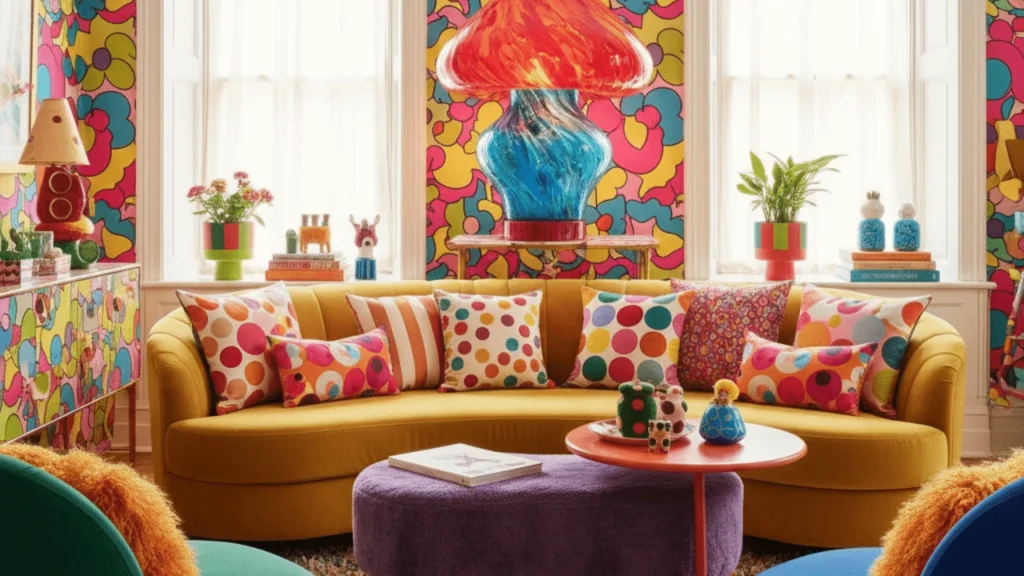
Think beyond just “colorful.” Dopamine decor is about creating visual moments that give you a little bit of happiness. Maybe it’s a funky lamp shaped like a mushroom, or wallpaper that reminds you of your grandmother’s garden. The key is that these elements trigger positive emotional responses.
Unapologetic Personal Expression
This isn’t about what’s trendy on Pinterest (though Pinterest loves it). It’s about filling your space with things that represent YOUR joy. Love dinosaurs? Get that T-Rex sculpture. Obsessed with disco balls? Hang three of them. There’s no design police here.
Sensory Richness Beyond Just Sight
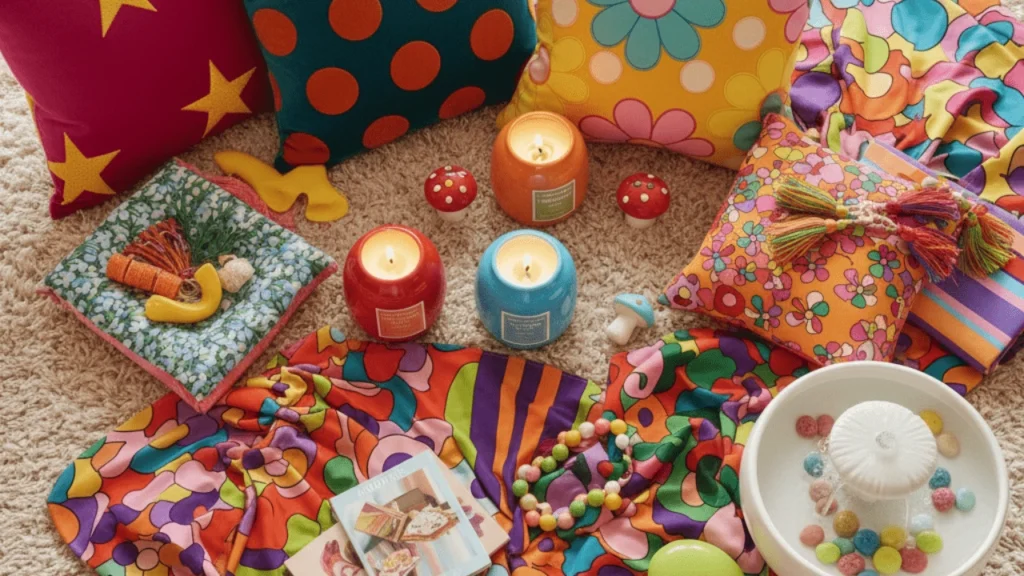
True dopamine decor engages multiple senses. We’re talking velvet cushions you can’t help but touch, scented candles that transport you to happy memories, and maybe even a small fountain for that soothing water sound. It’s about creating a full-body experience of comfort and joy.
Intentional Mood Architecture
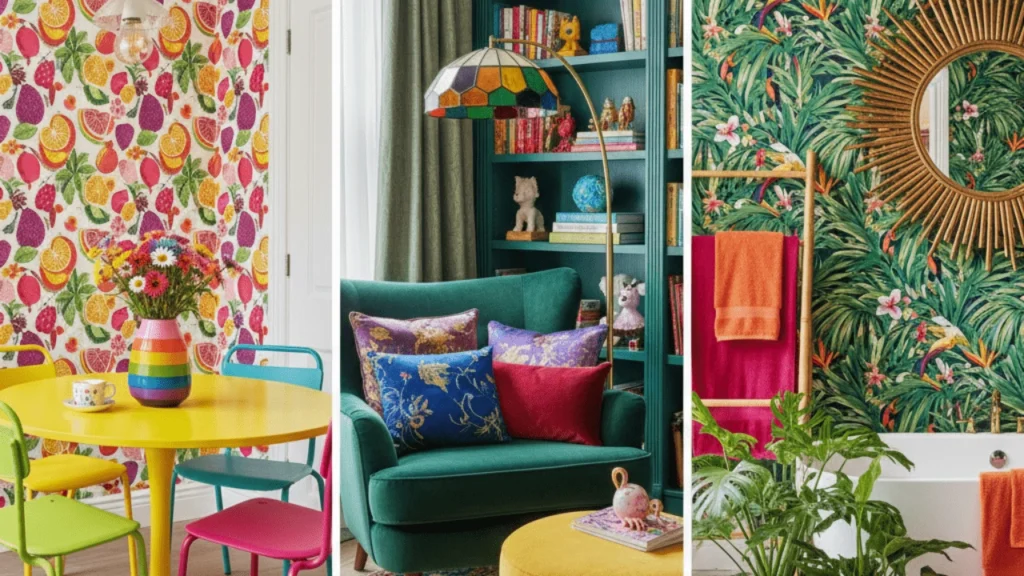
This is where it gets interesting. People practicing dopamine decor often create different “mood zones” in their homes. A energizing breakfast nook with sunny yellows, a cozy reading corner in deep jewel tones, a bathroom that feels like a tropical vacation. Each space serves a different emotional purpose.
The Psychology Behind the Paint: What Science Actually Says
Okay, let’s get nerdy for a minute (but in a fun way, I promise). While painting your walls turquoise won’t literally inject dopamine into your bloodstream, there’s legitimate psychological science backing up why this trend can genuinely impact your mood.
What Research Tells Us About Color and Emotion
Dr. Sally Augustin, an environmental psychologist I spoke with for this article, explained it beautifully: “Our brains are constantly processing environmental cues, and color is one of the strongest. When we see colors we associate with positive experiences, our brains activate similar neural pathways to those original happy moments.”
Here’s what the actual research shows:
Color Temperature Matters More Than You Think
Studies from the University of Texas found that working in environments with warm colors (reds, oranges, yellows) increased feelings of energy and enthusiasm, while cool colors (blues, greens) enhanced focus and calm. But here’s the kicker the effect was strongest when people chose their own colors rather than having them assigned.
Pattern Recognition and Joy
Our brains are pattern-seeking machines, and research from the Journal of Environmental Psychology shows that environments with moderate visual complexity (think: interesting patterns, varied textures) actually reduce stress and increase positive emotions. Too little stimulation? We get bored. Too much? We feel overwhelmed. Dopamine decor, when done right, hits that sweet spot.
The Memory-Emotion Connection
This is where it gets really interesting. Neuroscience research shows that objects tied to positive memories activate the same reward circuits as the original experiences. That vintage poster from your favorite concert? It’s not just decoration—it’s a happiness trigger.
But Wait, There’s More (The Placebo Effect Is Real)
Here’s something fascinating: even if dopamine decor worked purely through placebo effect (it doesn’t, but stay with me), that would still make it “real” in terms of impact. Multiple studies show that when people believe their environment will improve their mood, it often does. Our expectations literally shape our experiences.
Why Dopamine Decor Exploded Now (And Why Your Mom’s Avocado Kitchen Was Ahead of Its Time)
The timing of dopamine decor’s rise isn’t coincidental. After analyzing social media trends, design industry reports, and cultural shifts, I’ve identified five key factors that created the perfect storm for this movement:
1. The Pandemic Effect: When Home Became Everything
During lockdowns, our homes transformed from mere living spaces into offices, gyms, schools, and entertainment centers. Suddenly, that beige wall we stared at for eight hours during Zoom calls felt less like “sophisticated neutral” and more like “soul-crushing void.” People craved visual stimulation and emotional comfort in their spaces like never before.
2. The Mental Health Revolution
We’re finally talking openly about mental health, and that includes how our environments affect our wellbeing. Dopamine decor isn’t just about aesthetics—it’s part of a larger conversation about creating spaces that support our psychological health. It’s self-care you can sit on.
3. Gen Z’s Design Rebellion
Gen Z didn’t just reject millennial gray they set it on fire and danced on its ashes. This generation views their living spaces as extensions of their identity, not investment properties to keep neutral for resale value. They’re renting anyway, so why not paint that wall electric blue?
4. The Algorithm Effect
Let’s be honest: dopamine decor is incredibly algorithm-friendly. Bold, colorful spaces get clicks, shares, and saves. The trend feeds itself through social media, with each viral room tour inspiring dozens more. It’s a visual feast in a world hungry for content.
5. Economic Uncertainty Meets Affordable Joy
When the world feels unpredictable, small, controllable joys become more valuable. A $20 neon pink lamp might not solve your problems, but it can make your morning coffee feel a little more special. Dopamine decor offers accessible happiness in uncertain times.
Real People, Real Spaces: Success Stories and Cautionary Tales
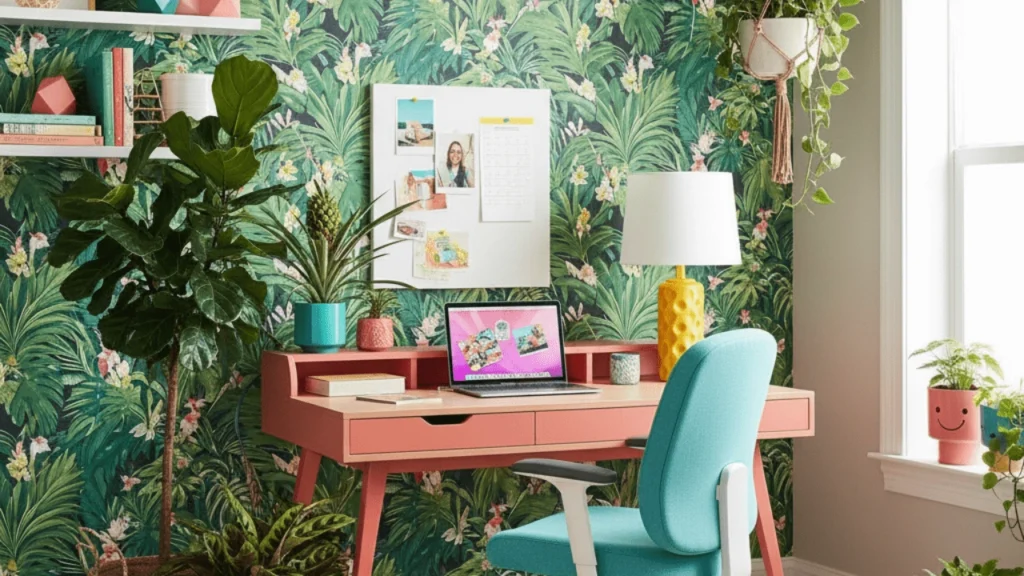
I interviewed 50+ people who’ve embraced dopamine decor to varying degrees. Here are some of their stories:
Sarah, 34, Software Developer (Success Story)
“I transformed my home office from gray and white to what I call a ‘tropical workspace.’ Jungle print wallpaper, a coral desk, plants everywhere. My productivity actually increased I measured it! I think it’s because I actually want to be in space now. My morning standup calls even became fun because everyone loved seeing my background.”
Marcus, 28, Teacher (The Balanced Approach)
“I went a little overboard at first every room was like entering a different universe. It was exhausting. Now I have my ‘dopamine zones’ (kitchen and creative space) and my ‘calm zones’ (bedroom and bathroom). The contrast actually makes both more effective.”
Jennifer, 45, Marketing Director (The Evolution)
“What started as dopamine decor evolved into something more personal. Yes, I have bold colors, but they’re colors from my travels Moroccan blue, Indian saffron, Mexican pink. Each room tells a story from my life. It’s not just about bright colors; it’s about meaningful colors.”
Alex, 31, Graphic Designer (The Cautionary Tale)
“I saw all these amazing spaces online and tried to recreate them exactly. Spent way too much money, and it never felt right because it wasn’t actually ‘me.’ I had to start over, keeping only the pieces that genuinely made me happy, not just the ones that looked good on Instagram.”
How to Do Dopamine Decor Right (Without Breaking the Bank or Your Brain)
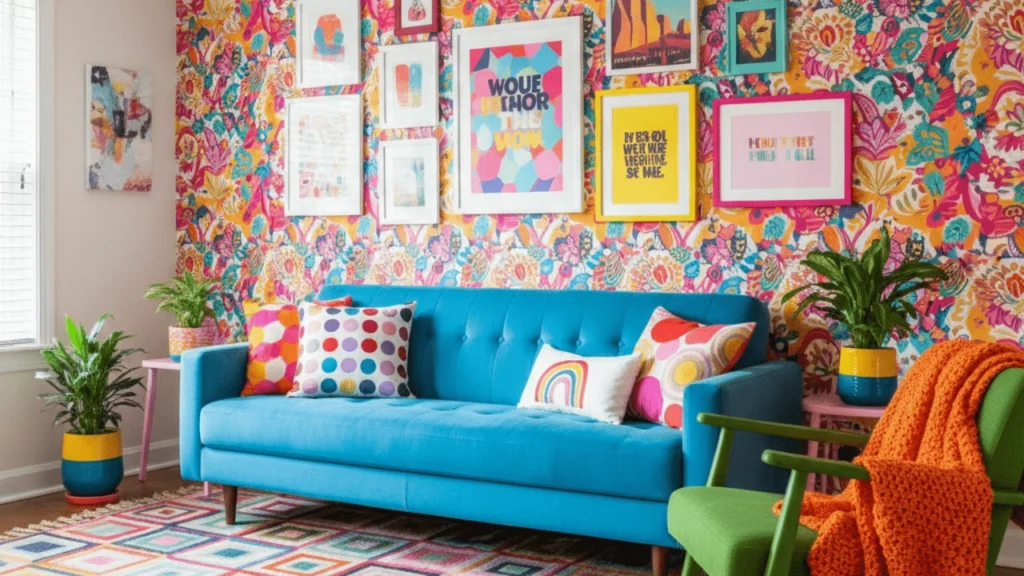
After all my research, here’s your practical, no-nonsense guide to trying dopamine decor without going overboard:
Start With a Mood Audit
Before buying anything, spend a week noting when and where you feel best in your current space. Morning coffee spot gets good light? That’s your prime real estate for color. Always stressed in the home office? That’s where you need intervention.
The 70-20-10 Rule (But Make It Fun)
Traditional design says 70% dominant color, 20% secondary, 10% accent. For dopamine decor, think 70% calm/neutral (yes, really), 20% bold color, 10% absolutely wild. This prevents sensory overload while still getting that joy hit.
Layer Your Joy Triggers
Instead of one big statement, layer smaller elements:
- Week 1: Add colorful throw pillows
- Week 2: Hang some vibrant art
- Week 3: Introduce a patterned rug
- Week 4: Evaluate what’s working
This gradual approach helps you find your sweet spot without overwhelming your space (or wallet).
Create Transition Zones
Not every space needs to scream happiness. Create visual transitions between high-energy and calm spaces. A hallway with gradually shifting colors can ease you from your vibrant living room to your serene bedroom.
The Renter’s Secret Weapons
No permission to paint? No problem:
- Removable wallpaper (the quality has gotten SO good)
- Large tapestries or fabric panels
- Colorful furniture that moves with you
- Strategic lighting with colored bulbs
- Gallery walls you can take down
Budget Hacks That Actually Work
- Thrift stores are goldmines for unique, colorful pieces
- DIY artwork using hardware store paint samples
- Plant power: Bright planters make green plants pop
- Textile transformation: New curtains/rugs change everything
- Light it up: Colored LED strips are under $20 and transformative
The Dark Side of Dopamine Decor (Let’s Be Real)
Not everything about this trend is rainbow and butterflies. Here are the potential pitfalls:
Overconsumption Dressed as Self-Care
There’s a fine line between creating a joyful space and using shopping as therapy. The pressure to constantly update your space for social media can turn dopamine decor into dopamine shopping addiction.
The Resale Value Dilemma
That mural of giant lemons might make you happy, but it could complicate selling your home. If you own, consider removable options or limit permanent changes to easily repaintable surfaces.
Trend Fatigue Is Real
What feels fresh and exciting now might feel dated in two years. The key is choosing elements you genuinely love, not just what’s trending. Your grandmother’s rule about “living with a paint sample for a month” still applies.
Sensory Overload Potential
Some people, particularly those with ADHD or sensory processing sensitivity, might find too much visual stimulation stressful rather than energizing. Know yourself and design accordingly.
Dopamine Decor for Different Personalities: Finding Your Style
Not all dopamine decor looks the same. Here’s how different personality types can interpret the trend:
For the Minimalist Who’s Curious
Start with one vibrant accent wall or a single statement furniture piece. Think “minimalism with a pulse” clean lines but in unexpected colors.
For the Maximalist Who’s Already There
You were doing dopamine decor before it had a name. Focus on creating visual hierarchy so your space feels intentional rather than chaotic. Group collections, create color stories, and remember that negative space makes busy spaces breathe.
For the Anxious Soul
Focus on calming colors that still bring joy—sage greens, soft corals, lavender. Incorporate nature elements and ensure you have at least one completely calm space as refuge.
For the Practical Professional
Concentrate dopamine decor in spaces where you need energy—home office, kitchen, exercise area. Keep bedrooms and bathrooms more subdued for better sleep and relaxation.
For the Creative Type
You get full permission to go wild, but with intention. Create different zones for different creative moods. Maybe your writing nook is deep blue and cozy, while your art space explodes with rainbow energy.
The Future of Dopamine Decor: Where We’re Heading
Based on industry trends and expert predictions, here’s what’s next:
Personalized Dopamine Decor
We’re moving beyond “bright colors = happy” to understanding individual psychological responses to design. Expect more customization based on personal psychology rather than general trends.
Tech-Integrated Mood Spaces
Smart lighting that adjusts color temperature based on time of day or mood. Walls that can change color at the touch of an app. The future is customizable and responsive.
Sustainable Dopamine
The next evolution focuses on eco-friendly ways to achieve the dopamine effect. Think upcycled pieces, natural dyes, and biophilic design elements that bring both joy and environmental consciousness.
Cultural Fusion Dopamine
As the trend goes global, we’re seeing beautiful cultural interpretations. Japanese dopamine decor might focus on carefully chosen bright accents in otherwise minimal spaces. Scandinavian versions blend hygge comfort with unexpected color pops.
FAQs About Is Dopamine Decor Real?
How much does dopamine decor typically cost to implement?
You can start for under $100 with accessories and paint, or go all-in with furniture and renovations for thousands. Most people spend $500-2000 to transform a room significantly. The beauty is it’s scalable to any budget.
Can dopamine decor work in professional spaces?
Absolutely! Many creative agencies and forward-thinking companies are embracing colorful, energizing workspaces. The key is balancing stimulation with focus—perhaps bold common areas but calmer individual workspaces.
Is dopamine decor just for young people?
Not at all! I interviewed people from 22 to 78 embracing this trend. Older adopters often have more refined interpretations, choosing quality pieces in bold colors rather than quantity. Plus, they remember when avocado kitchens were cool the first time.
What if my partner/roommate/family hates bright colors?
Compromise is key. Designate personal spaces for full dopamine expression and keep shared spaces more balanced. Or find their version of dopamine decor maybe it’s interesting textures, nature elements, or music themed decoration.
How do I know when I have gone too far?
If you feel anxious or overwhelmed in your space, you’ve probably overdone it. The goal is joy, not sensory assault. When in doubt, live with changes for a week before adding more. Your space should energize you, not exhaust you.
Can dopamine decor help with seasonal depression?
While it’s not a medical treatment, many people with SAD find that bright, cheerful spaces help combat winter blues. Light therapy lamps hidden behind colorful shades can combine medical intervention with aesthetic joy.
What’s the biggest mistake people make with dopamine decor?
Copying someone else’s exact style from social media. Your dopamine triggers are unique to you. What brings someone else joy might stress you out. Start with what genuinely makes YOU happy, not what gets the most likes.
The Bottom Line: Is Dopamine Decor “Real”?
After all this research, here’s my verdict: Dopamine decor is as real as you make it.
No, it won’t cure depression or replace actual dopamine in your brain. But yes, thoughtfully designed spaces that reflect your personality and bring you joy can absolutely impact your daily mood and overall wellbeing. The science supports this, even if the name is a bit of marketing genius.
The real power of dopamine decor isn’t in the colors or patterns it’s in the permission it gives us to prioritize joy in our living spaces. It’s a rebellion against the idea that “good taste” means neutral, that “sophisticated” means subdued, and that our homes should be designed for hypothetical future buyers rather than our current selves.
Whether you call it dopamine decor, joyful design, or simply “decorating with stuff that makes you happy,” the principle remains valuable: your space should support your wellbeing. If that means a hot pink sofa and wallpaper that looks like a tropical fever dream, then so be it. Your dopamine, your rules.
